Every year, promising Nigerian fintechs hit the same wall, primarily because a regulator they didn't fully understand — the CBN, the FCCPC, the SEC, or the NDPC — froze an account, delisted an app, or invalidated a loan book overnight.
If you're building in Nigeria's financial technology space right now, you're not operating in one regulatory environment. You're operating in at least five, simultaneously, and each one carries penalties, bans, or multi-million Naira fines.
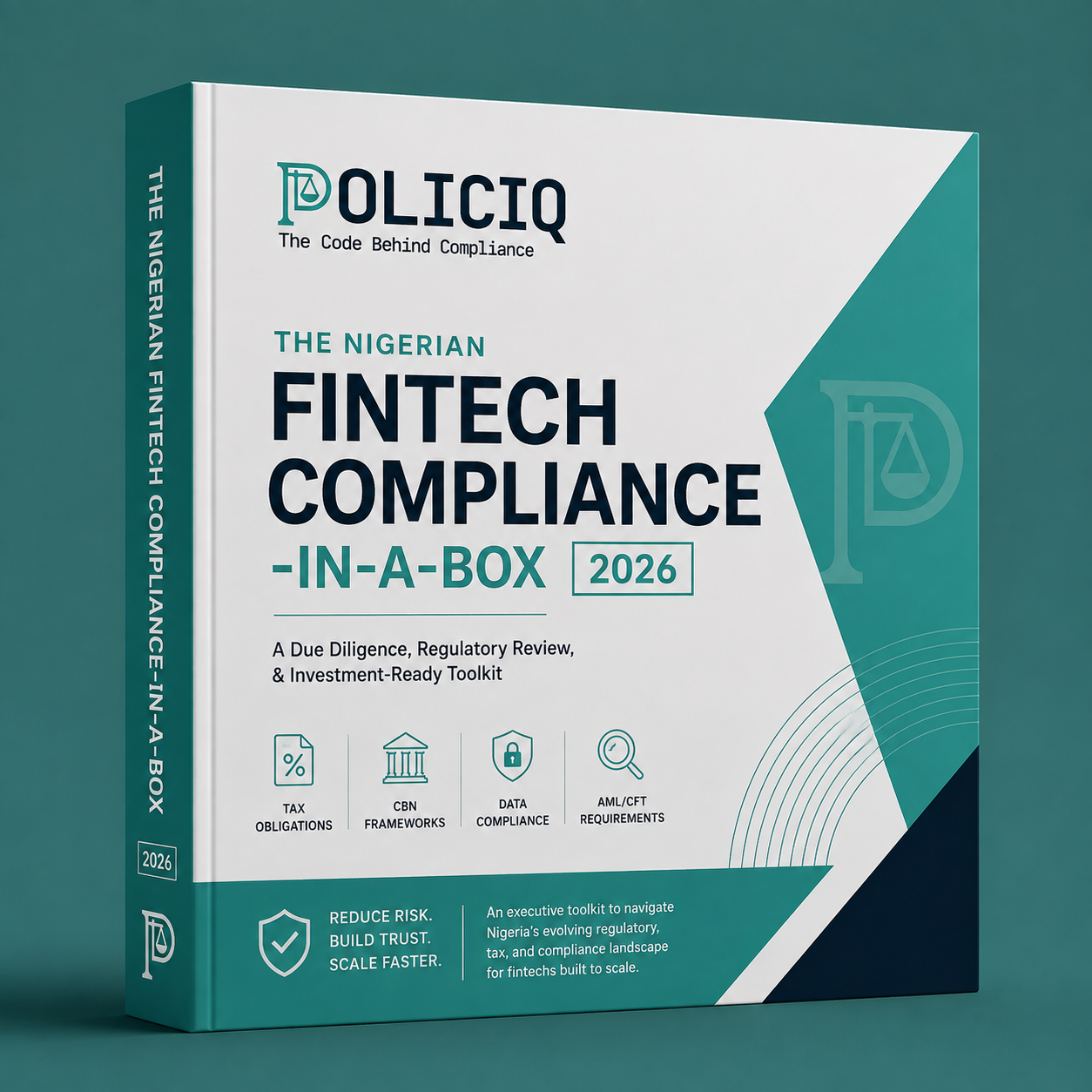
That's the gap The Nigerian Fintech Compliance-in-a-Box was built to close.
Late Compliance, High Risk
Most founders treat compliance as a document to file once a license is secured. In Nigeria's current regulatory environment, that mindset is exactly what gets platforms shut down.
Consider a few realities baked into today's framework. Tiered KYC isn't a policy, it's code. If your onboarding logic doesn't hardcode transaction and balance caps at each verification tier, you're not compliant, no matter what your terms of service say. A single "NO" on a governance checklist can freeze a funding round. Investors doing due diligence don't ask if you plan to fix a gap, they ask if it's already fixed. One violation in your recovery workflow can land you multi-millionaira fines or pull your app from Google Play and Apple's App Store within days.
This is why the toolkit doesn't stop at explaining the law. It translates statutory obligations directly into the language your engineering, product, and finance teams already speak: system rules, database schemas, and escalation timelines.
What's Actually Inside
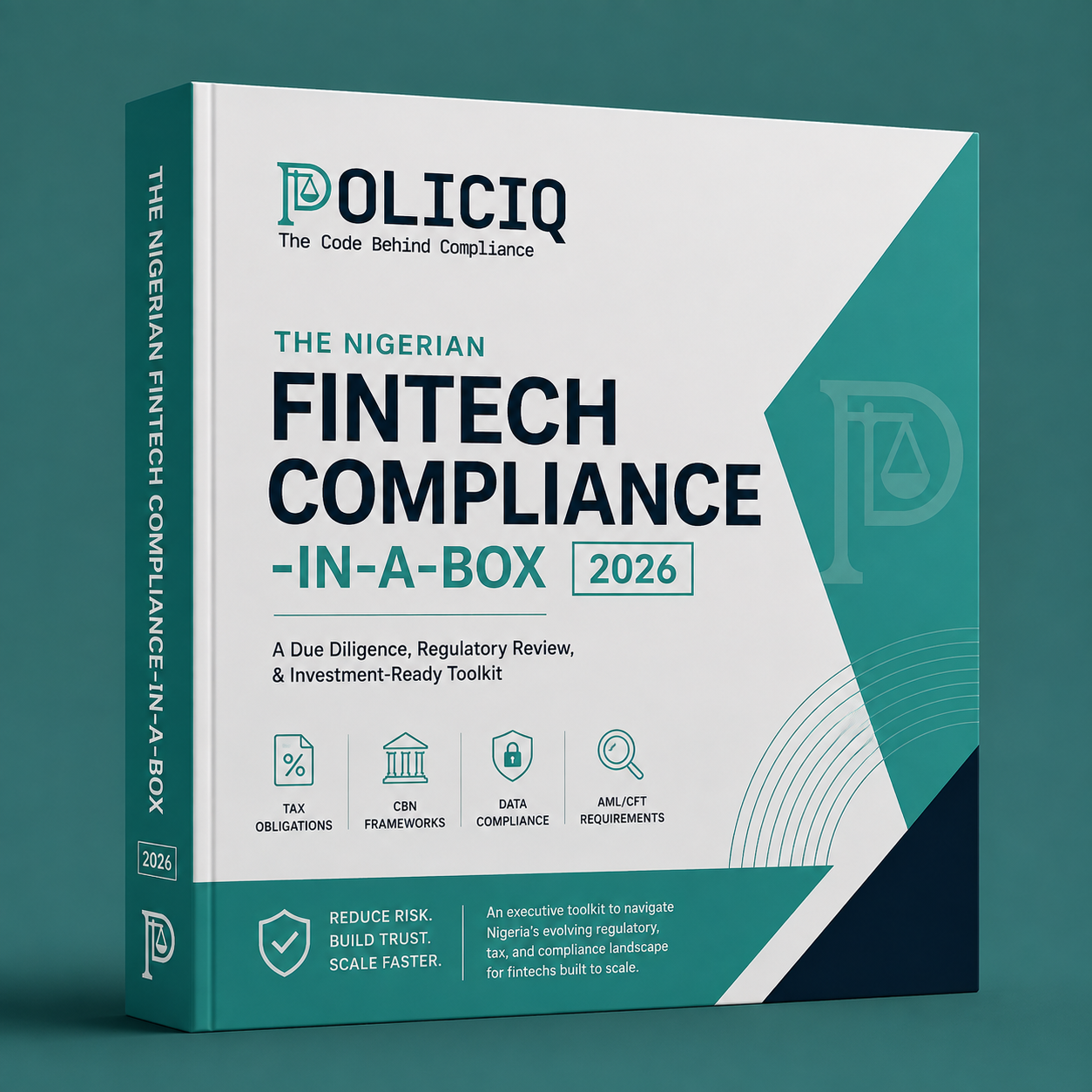
The toolkit is structured as a full operational blueprint, not a legal primer. It covers:
A Diagnostic Matrix Across Seven Compliance Segments: Corporate governance and IP protection, AML/CFT and KYC, data privacy, tax obligations, banking rails and deposit insurance, digital lending, and virtual asset regulation. Each line item is a yes/no diagnostic tied to a specific legal authority, so gaps are identified instantly rather than discovered during due diligence.
A Breakdown of Every CBN Payment License Category — PSSP, PTSP, Super Agent, PSS, MMO, Switching, and Payment Service Bank — mapped against exactly what each license permits, what it prohibits, and where founders commonly over- or under-structure their corporate entities.
A Capital & Escrow Calculator: Because knowing that you need a license is different from knowing you need ₦2 billion locked in an escrow account before you can even apply for one.
Two Full Regulatory Pathways for Digital Lending: The non-bank Moneylender + FCCPC route versus the CBN Microfinance Bank route, broken down by capital threshold, deposit rights, and card issuance permissions, so founders choose the right structure the first time.
A Complete VASP and Virtual Asset Framework covering SEC licensing tiers, the FATF Travel Rule, blockchain monitoring obligations, and the new harmonized tax treatment of crypto disposals, staking yields, and token conversions.
Nine Ready-to-Implement Engineering Blueprints including a statutory data breach response timeline, automated fraud and NFIU reporting logic, fair debt recovery workflows, and capital gains logging for digital assets. These aren't abstract policy statements; they're logic flows your engineering team can paste directly into product specs.
A 365-Day Regulatory Calendar so nothing falls through the cracks between the bi-monthly stamp duty remittance, monthly VAT filings, quarterly NRS transmissions, and annual audit deadlines.
Why This Matters Now
Nigeria's regulatory landscape isn't standing still. The unification of the tax code under the Nigeria Tax Act, the emergence of the Nigeria Revenue Service as an active enforcement agent, the new harmonized VASP tax matrix, and the expanding reach of the NDPA have all shifted meaningfully in the past year. Compliance frameworks built even eighteen months ago are already out of date.
Whether you're a founder trying to understand which CBN license actually fits your business model, a compliance officer building out AML/CFT reporting infrastructure, or a venture investor running due diligence on a fintech's regulatory exposure, this toolkit gives you a shared, structured reference point so that gaps get fixed before they become liabilities.
Fintechs that survive Nigeria's next regulatory cycle won't be the ones with the best product. They'll be the ones whose legal structure, tax logic, and data architecture were built to match the law. Fortunately, The Nigerian Fintech Compliance-in-a-Box is built to do just that.
[Click Here to Get the Complete Toolkit on Selar]
___________
This toolkit provides advanced strategic guidance and does not constitute legal representation. Formal attorney-client privilege is activated only through a signed Retainer Agreement with PolicIQ Legal.