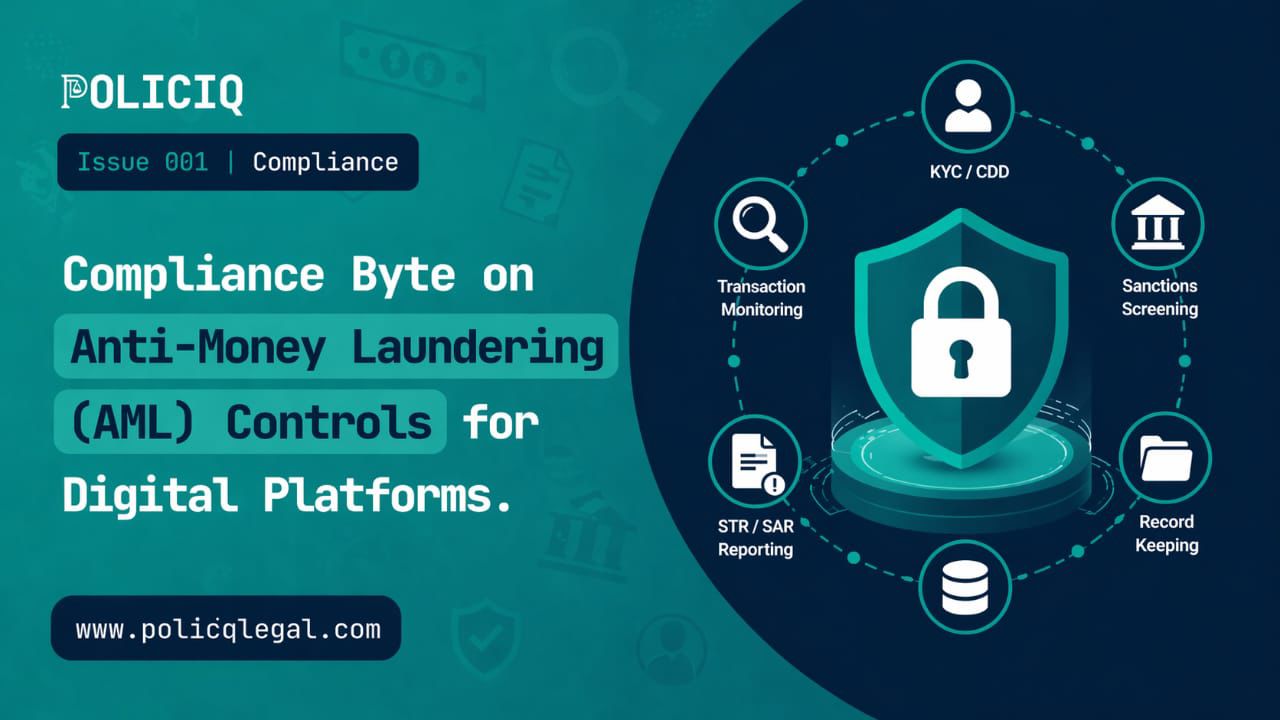
What is an AML Controls Framework?
An AML Controls Framework is one of the most essential compliance components for digital platforms, particularly fintechs, digital lenders, payment service providers, and online marketplaces. It defines the rules, processes, and technologies used to identify customers, monitor transactions, detect suspicious activity, and report to regulators in line with applicable AML/CFT laws.
This framework typically includes customer due diligence (CDD/KYC), enhanced due diligence for high-risk users, ongoing transaction monitoring, sanctions screening, suspicious transaction reporting (STR/SAR) procedures, and record-keeping obligations. For digital platforms that operate at scale and process high-velocity transactions, the AML Controls Framework establishes the operational backbone for preventing illicit financial flows and ensuring regulatory compliance.
Why is it Essential?
The inclusion of a robust AML Controls Framework is justified by the heightened exposure of digital platforms to fraud, identity theft, money laundering, and terrorism-financing risks. Unlike traditional financial institutions, digital platforms often onboard customers remotely, rely heavily on automated processes, and operate across multiple jurisdictions with varying regulatory expectations.
Without clear AML controls, platforms face significant risks such as:
- Onboarding fraudulent identities
- Facilitating untraceable transactions
- Breaching sanctions rules
- Failing to detect suspicious patterns early
These gaps can trigger regulatory sanctions, licence suspensions, reputational damage, and loss of investor confidence. By defining risk-based CDD procedures, automated monitoring rules, escalation workflows, and reporting obligations upfront, the AML Controls Framework provides predictability, reduces compliance failures, and strengthens operational resilience.
Compliance Sustainability
Compliance sustainability is embedded in this framework because effective AML controls support long-term platform integrity, consumer trust, and regulatory alignment. For digital businesses, it ensures that growth does not outpace compliance capacity and that automated systems remain transparent, auditable, and adaptable to evolving risks.
For regulators and financial-sector partners, it enhances ecosystem stability by reducing systemic exposure to illicit activity. From a broader governance perspective, strong AML controls promote financial inclusion by enabling safe onboarding of legitimate users while filtering out bad actors.
By aligning risk-based monitoring, data governance, and regulatory reporting, the AML Controls Framework reinforces the commercial, operational, and ethical sustainability of digital platforms and contributes to a safer, more transparent digital-economy environment.
[ABOUT_THE_AUTHOR]
PolicIQ Legal is a policy-tech advisory and compliance intelligence firm dedicated to helping African tech companies navigate the complex regulatory landscape with confidence.
[NEED_AML_COMPLIANCE_GUIDANCE?]
Our team can help you build robust AML controls frameworks, conduct compliance audits, and ensure your digital platform meets all regulatory requirements.
[SCHEDULE_CONSULTATION]